Eating healthy ✅ Working out ✅ Blood tests normal ✅
…but still not feeling good?
Low energy. Brain fog. Mood swings.
The missing piece might be your gut.
Gut isn't just about digestion. It's our "second brain." 95% of serotonin (our "happy" chemical) is made there.
Poor absorption can leave us tired, anxious, or unfocused - even with a perfect diet
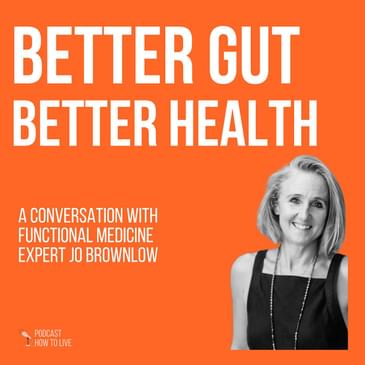
In the latest How to Live episode, I sit down with Functional Medicine Coach Jo Brownlow. We unpack:
- What gut health really means
- How it affects focus, emotions, and energy
- Simple steps busy people can take today
If you're doing "all the right things" but still feel off, this conversation could be your missing piece.
Shownotes
https://howtolive.life/episode/102-better-gut-better-health-with-Jo-Brownlow
How to Live Newsletter One honest thought, every second Saturday. No spam. Subscribe here - https://newsletter.sharadlal.net
Get in touch connect@howtolivecompany.com
About Sharad Lal https://www.sharadlal.net/
Follow on LinkedIn https://www.linkedin.com/in/sharadlal24/
Sharad Lal: Hi, everyone. Welcome to How to Live, a podcast that explores ways to live a good life. I'm your host, Sharad Lal. This is episode 102. Today, we are talking about gut health and why it matters more than ever for folks with busy lifestyles. To guide us through this, we have Jo Brownlow, a certified functional medicine practitioner and holistic health coach. Jo's not just an expert; she's lived it. After years of chronic fatigue and burnout, she turned to functional medicine and completely changed her life. That experience now shapes how she helps others do the same. In today's episode, we break down what gut health really means and how it impacts energy, mood, and focus. We explore the science behind stress and digestion, how functional medicine goes deeper than conventional care, and what simple, sustainable habits you can start today. If you're feeling a bit off, but blood tests keep coming back normal, this episode might be the missing piece. As always, thank you for tuning in. How to Live is ranked in the top 3% of all podcasts globally. Thank you for that. Now, here's the episode.
Hi, Jo, welcome to the How to Live podcast. How are you doing this morning?
Jo Brownlow: I'm very good. Thank you for having me today.
The Story Behind Getting Into Functional Health
Sharad Lal: Thank you for making it, Jo. What got you into functional health?
Jo Brownlow: I was diagnosed celiac when I was born, and it got glossed over, and then I went through my teens, twenties, thirties living a sort of a very happy, unhealthy life. And then I had my first child, and he had a lot of challenges. He was showing neurodivergent challenges. We sent him to Tanglin School, which is in Singapore, 'cause he was born here actually, and he really struggled to be in a very busy environment. He couldn't learn anything. So we had lots of ed psych reports made, and they just diagnosed him with a, a selection of issues of dyslexia, dyscalculia. Autism was one of the one—one of the specialists—but another one said they couldn't rule it out, and it was one of these things where you are faced with a child that's struggling and you want to do what you can. A girlfriend of mine said, "Have you looked into gut health?" noticing he'd got this little bloated belly at the end of every day. Luckily, the doctor that I see in Singapore, she's quite functional-based, and she said, "Oh, go to see a nutritionist." We did a stool test, which is really detailed... It's called a GI map. And it came about that he'd got very high levels of candida in his gut, and he had also got sort of a parasite and low good bacteria. It was just really a real mess inside the gut. And so we went on this journey of doing quite a challenging process of cutting out the bad foods, cutting out all sorts of sugars and starches, 'cause candida loves to feed on sugars and starches. And we had to give him lots of different supplements to basically eradicate what was bad happening in his gut. And we noticed a massive transformation, actually, quite quickly. At the same time, I then got diagnosed with an autoimmune illness called Hashimoto's. Now, autoimmunity means basically my own immune system was attacking my thyroid. So everything slowed down in my body. And I think that was a sort of a wake-up call that I had to do exactly what I was doing with my son, which was cleaning up my diet, cleaning up my health. I stopped drinking alcohol, and I basically went through a journey of understanding what works for me and what doesn't. During that time, because I come from a... I have a degree in chemistry, I just decided, "Okay, I'm gonna throw myself into actually do learning how to do this," 'cause I think the world really needs to be educated on this, that you can reverse neurodivergent challenges because there's a lot of gut neuroinflammation happening in these kids' bodies. But also, you can reverse autoimmune diseases. It's a deep story, actually.
What is Functional Medicine?
Sharad Lal: Thank you for sharing that. Yes. It would've been such a difficult time for you, especially when it's your own son. I think it's more difficult than when it's you. You managed to go about it in a systematic, scientific way. Absolutely. To figure out what really was wrong. Yes. How to sort it out. Yes. Is that what functional medicine is?
Jo Brownlow: Yes. And I think people call it alternative medicine, but actually functional medicine is actually very science-based. It's all about looking at people's blood work, understanding really what the biomechanics of the body is doing so that we can find out which pathways are stuck and which areas are inflamed, which are exacerbating the inflammation, which is exacerbating that sort of imbalance in the body. It does come down to the gut a lot of the time because, I think that people talk about the gut being the second brain. I sort of feel it's more of a first brain 'cause it actually feeds the brain. So, you know, we create all these neurotransmitters like our serotonin, which is that sort of happy neurotransmitter. That 95% of our serotonin that we have in our body is created in the gut. So if you've got anything out of balance in the gut, then you're not gonna be producing the right amount of serotonin. And serotonin is linked to poor sleep because serotonin is a precursor to melatonin—that's a bit deep—but also bowel motility. So low serotonin means that you're not gonna have regular bowel movements, which can affect, you know, toxicity. So everything is interlinked. And the way you understand a person's body is by looking at blood work, looking at test results, but also understanding someone's symptoms, understanding their history, because things that have happened, maybe even in their childhood, could be affecting them now.
Sharad Lal: That is so interesting.
Jo Brownlow: We talk about sort of triggers and we might find that. One is that sort of we look for root causes. Yes. And but when we talk about the gut, that might not be the root cause. The gut is a symptom of maybe another root cause, like chronic stress.1 If somebody's got a lot of stress in their lives, they've had a lot of trauma, then that can suppress the good bacteria in the gut.2 It can exacerbate some leakiness in the gut. Leaky gut is quite a big catchphrase nowadays. Yes. But it can be a cause for that inflammatory state where the body's sort of on fire to a certain degree, and we want to understand why has the gut become leaky.
What is Inflammation?
Sharad Lal: Let's talk about these two terms. Yes. Inflammation and leaky gut. So one of the things you look at, even whether it's the gut and even other parts of the body, is what parts are getting inflamed. Yes. And that tells you there's something going on there, which is not right. Is that how it works?
Jo Brownlow: When you cut yourself, yes, you see that there'll be sort of red and it, it starts to heal and you can see it repairing itself. It's like having a sort of a cut inside your body, but having it all the time, which is not ideal. What we want to do is avoid adding in the factors that exacerbate it, that make the inflammation worse. There's so many different things that we live in a world which is full of quite strong inflammatory mediators, we call them. So what we want to do is try and remove as many inflammatory mediators from the person's world. So it could be that they aren't sleeping properly. So they've got high cortisol at night, stress hormones at night. So they're not doing the preparation during the nighttime, which actually is one of the best times of the day. If you are getting to bed at one in the morning every night because you are up eating ice cream, watching Netflix, and then have to get up at seven the next day, that's not a decent preparation phase through the body. We want to look at all these very, very little details, because inflammation is all about... especially this chronic inflammation, which is unrelenting, ongoing inflammation is all about... it's happening in the bloodstream, it's happening from a cellular level.
Role of Viruses or Pathogens in Gut Health
Sharad Lal: Inflammation can happen through any of these things. Plus, there could be something sitting inside your body like a virus.
Jo Brownlow: Yeah. Virus or pathogen. Yes. Or yeah. Viruses, unfortunately, when we get them, like something like glandular fever, if we get that in childhood, it actually stays in the body. And when we go through times of stress, we might find that it actually gets triggered. And you get people with just low-lying, not feeling quite right, and that actually could be like an Epstein-Barr flare and that's sending their immune system out of whack. The difficulty with functional medicine is what we're trying to do is reverse things. We're trying... We don't want to get to the point where you get diagnosed with type 2 diabetes or an autoimmune illness like MS or rheumatoid arthritis. We don't wanna get there, but a lot of the time, my clients come to me at that point, and it's a much harder job to move back from that point than to try and just avoid getting there in the first place.
Early Signs of Gut Health Issues
Sharad Lal: So that's why the early signs, yes, are the things that you look at. Absolutely. Whether it is, I don't know, energy levels... Yep. Brain fog. What are some early signs that maybe the gut or other things advanced as well?
Jo Brownlow: Well, I think a lot of people think if they've got a gut problem, they'll have to be bloating and have to be constipated. That actually is a later part of gut dysbiosis. It could be that they're getting more rashes. They've got eczema, they're feeling like certain foods aren't sitting well with them. Anxiety, depression. So it's really something quite far removed from the actual gut. But it's an early trigger, early warning sign.
Sharad Lal: Anxiety is such a good one. And I can maybe talk a little bit about my experience. I used to always have loose motions whenever I was stressed and I never understood it. And I thought this was like all my life, and there wasn't that much education about it. And when I go through anxious stages, it's my stomach and gut that gets affected. Once I started doing mindfulness and getting through this anxiety, I was able to digest food better. Oh, yes. And again, this just happened by chance because I was getting into mindfulness, but that affected my gut. But that's your point, that the stress and anxiety could be affecting it every time without you realizing it. Yeah. And you might think it's something else.
Jo Brownlow: Yeah. And we talk about getting a "gut feeling." It is... our brain speaks to our body and our body speaks to our brain. So we constantly need to be aware of the fact that if we are feeling anxious or depressed, or feeling lots of negative thought loops, that could be the body, yes, giving you a message and it's not telling you, "Give up, eat a chocolate bar." What it's telling you is, "Okay, maybe it's time to slow down. Maybe it's time to start doing the mindfulness practice, start doing some sort of vagus nerve activation," because that's something that helps with calming from that stress response down to that sort of parasympathetic state. Yeah.
Sharad Lal: You said that maybe you're feeling anxious, which could affect the gut. Is there any effect once your gut is not working well on decision-making, clarity of thought, energy? What starts going wrong?
Jo Brownlow: What our gut does, the first thing that it does when you eat some food is it has to break it down. If you are stressed, you are not gonna produce something called stomach acid or not enough stomach acid, which breaks down the food to allow it to be digested properly. Now we need stomach acid to trigger the release of two substances that help with the sort of digestion and the assimilation of the nutrients that we have in our food. So stressed, eating fast on the run, not producing enough digestive secretions so you don't take the nutrients from your food, so you then get low in certain nutrients. You know, it could be vitamins, it could be iron, could be vitamin D. Now, these are all really important nutrients to support biochemical reactions in the body. Minerals like magnesium are lovely and calming for the body. So I think there's a big trend of people taking magnesium nowadays. You need to take the specific type, magnesium glycinate, the calming one. You don't wanna take lots of magnesium citrate 'cause your bowels would move too fast. But what we want to do is look at our bodies as this sort of beautiful biochemical reaction and that we need all the different cofactors to support those processes. If we are not digesting, then we're not gonna absorb the nutrients. Those nutrients won't be available for the cofactors. And that leads to things like... dopamine is another neurotransmitter, and dopamine is your concentration neurotransmitter. And so if you have low B6, you're not absorbing your proteins very well, or you're not eating enough protein, then you won't have the amino acids available to create the dopamine to allow you to concentrate. So it's really looking at the body and puzzle-piecing what nutrients are missing. "Let's fill those in while we work on the root cause of getting the digestion working better, getting the gut bacteria to the right levels."
Sharad Lal: And at a simple level, it's more about eating those nutrients. Yes. Making sure you get them. And the second is absorption. Yes. And sometimes, like you said, the absorption could not happen because of the factors that you talked about.
Jo Brownlow: You could be eating the most healthy diet, but because you are maybe stressed or maybe the interesting, I like to talk about this link between the thyroid. The thyroid is a gland in your neck, which sets the metabolic rate for every cell in your body. And when it slows down, your digestion slows down, as in it... you can't produce as much stomach acid. Now the problem with that is the cofactors needed to allow the thyroid to work properly are things like iron, zinc, selenium, iodine, vitamin A, and protein. And if you're not digesting well, then those nutrients then end up not being absorbed. So it's basically this cyclical nature of slow thyroid, then it's even slower because you're not able to absorb the nutrients to support the thyroid hormone.
Doctor vs. Functional Medicine
Jo Brownlow: So there's a lot of women I come across take thyroid hormone support, which is just a T4. It's one of the hormones that the thyroid produces. And a lot of them come to me with T4. That works fine, but actually it... in order to get the active thyroid hormone, it needs to be converted to something called T3. And if you have any liver challenges, inflammation, low selenium, those sorts of things, then you're not gonna convert. So they're taking a drug that's not actually supporting them; it's actually suppressing them in the end. So working through that because the sort of the traditional mindset from a doctor is, "I've given you the drug, you are fine. And if you're feeling bad still, then just sort it out." And I'm not being negative about doctors because they are trained in the way they work and they've probably not been trained to try and delve deeper. But it's necessary to, if you are taking thyroid hormone support, then to actually feel good. And if you're not optimal, then to see a functional medicine practitioner.
Sharad Lal: And if I understand, that's a great point you're bringing about between doctors and functional medicine. Now, typically a doctor would look at, let's say you've done blood work, something's going wrong, and give you a medicine and then you're off. Yep. It's supposed to work. If I understand right, what functional medicine does is it then goes and looks at what the medicine is doing to your body. Yeah. How's it being absorbed? What is changing? So you do a blood test after taking medicine for, let's say, I know, two to three months. See where the levels are. Yeah. Then you realize maybe, so tweak else... tweak... tweak it, and tweak it. So it's like Sherlock Holmes. Yes. Where you're trying to get data each time from either blood work or some insulin tests, whatever kinds of tests that you set up. Absolutely. And every time you get more and more data, you're creating that personalized plan for people. Absolutely, a hundred percent.
Insulin As An Important Marker
Jo Brownlow: And interesting you mentioned insulin. Insulin is not a standard marker that you would run on a blood panel. If you go to a health check in Raffles or Gleneagles or whatever, their health check will cover just a fasting glucose. Now that will tell us how much sugar you've got in your blood or how high your blood sugar is. They may test something called HbA1c, which tells us your three-month marker, but they won't test insulin as a matter of course. So they may go, "Oh, you're fine," because your blood sugar hasn't risen, but actually when your blood sugar starts rising, that's around the third stage of insulin resistance, type 2 diabetes.
Sharad Lal: Thyroid, one that you talked about. Insulin, gut, anything that we should go deeper into? Any of these?
Jo Brownlow: Well, I think the cholesterol thing is quite an interesting one because there's a big move to medicate people with statins who have high cholesterol. For people who are in a stressful job, a big factor for higher cholesterol is actually stress. What you would like to do is if you do see slightly raised cholesterol levels, to not go, "Oh my gosh, I need to take a statin. I need to lower my cholesterol levels." Cholesterol actually isn't bad. It's something that our sex hormones are... it's basically the foundations for our sex hormones. So if we suppress it too much, then we're gonna suppress other things in the body. Statins have their time and place, they can drop inflammation. They're helpful for that. And if it's unrelenting cholesterol, then that might be something to add in for the short term while you resolve looking for the root cause.
How To Build Our Gut Health?
Jo Brownlow: How do we build our gut health? What are your views on how we should be thinking about gut health? We don't want to just throw probiotics at it, 'cause that could actually fuel a fire. So there's different dynamics in the gut that really don't work well with adding more probiotics. And certain strains of probiotics can make you worse or better, and that's why it has to be quite tailored to a person. So there's this process called the "five R's of gut healing," and the first R is the remove phase. Now the remove could be foods that are causing you bloating or discomfort or anxiety or anger. 'Cause some people might just get angry when they have a certain food.
Sharad Lal: There is gluten. If I get gluten, I get angry. Remember not to give you gluten then.
Jo Brownlow: No, exactly. My husband doesn't want me to have it. Yes, so we want to remove it. So it could also be a dysbiosis of opportunistic overgrowth, or it could be candida, or it could be a pathogenic overgrowth. Now you won't know what these things are unless you run something called a GI map. It's a stool test of what is happening inside your gut, and it can tell us whether you've got good digestion, bad digestion, or whether you've got leakiness in the gut. There's a marker called zonulin. It tells us whether you've got a gluten sensitivity, but it'll also tell us whether you've got something like H. pylori, which is an overgrowth that suppresses your stomach acid, which we talked about earlier. So that is quite a good path to go down if you really have long-term, ongoing issues that you are just fed up with. Now, going down that route, you do the test and you can then treat the dysbiosis, it's called. But the treatment of the dysbiosis is the remove phase. The next phase, we want to replace. Now, if somebody has low stomach acid, you can actually, yeah...
Sharad Lal: Just one question on that, should most of us preventively go for that test, or you said only if things are going crazy?
Jo Brownlow: It's an expensive test. It's not cheap. I would say not to do it as a preventative measure. Okay. But, only really if you've got issues. Okay. I tend to even avoid it with people who have terrible diets. Oh, okay. Because if you've got a terrible diet, fix the diet. Of course, you've got bacteria. Yeah. Fix the diet. So there's no point in launching in on saying, 'cause all it's gonna tell you is it's got, you've got rubbish gut bacteria.
Sharad Lal: And the way for diet and gut, like you said, is experimentation. Yeah. You see what's working for you, what's not. Maybe dairy, you're now sensitive to. You remove it. Yeah, totally.
Jo Brownlow: I mean, gluten is a common one. It exacerbates something called... it exacerbates the release of something called zonulin, which opens the junctions, the tight junctions as the gut lining. Right. And the gut should have nice spaces to allow for the nutrition to flow through, but not large food particles and toxins to get through, 'cause that's what happens when the gut opens up and it turns leaky.
Sharad Lal: So that's what a leaky gut is.
Jo Brownlow: That is what leaky is. Once it opens up so much that the toxins go then to the liver and or something. Yes, because our gut is external to the body. Yes. The internal body, it's the interface. The gut is the interface between the external down through here and the internal in the body. And then when these things go through, they seep into the bloodstream. And then the immune system's going, "Why are you here? This is not right." So it starts attacking things that are unfamiliar and those unfamiliar things, even though they're not actually doing much harm, especially if it's just food, will then lead you to develop those food sensitivities. So there's the difference between a sensitivity and an allergy. Yes. So there are different types of antibodies that are created. What we want to do is remove the foods that are going to cause the gut to be alarmed. And a lot of the time if you've got a leaky gut, it'll be all the foods that you're eating currently, which is not ideal. So that's why I'm not a massive fan of doing these food sensitivity tests either because if somebody's showing sensitivities to a lot, they then just get this evidence that everything they like eating is off the table. But at the same time, if you are struggling to know exactly what's not right, then it can be quite helpful. And then removing those foods and then going on to the rest of the, the R's of the five R's. So you want to replace it by adding in maybe something to boost stomach acid, which could be something like apple cider vinegar or lemon with mealtimes to basically give more acidity in the gut. Or there are supplements that you can take for that.
Sharad Lal: And it's good to have that. Maybe 15 minutes before you eat, just say, or during or a few...
Jo Brownlow: Yeah. Even five minutes before, slowly drink it through the meal so that it's adding in the acidity while you're drinking it. Preparing your gut. Yes. Saying, "Hello, produce bile, produce digestive enzymes," sort of thing. We want to get rid of things that are gonna exacerbate the leaky gut, so there's things like non-steroidal anti-inflammatory drugs like your ibuprofen, that exacerbates leakiness in the gut. So we want to not be taking those anymore.
Sharad Lal: What could be medicines that have this?
Jo Brownlow: Oh, well, ibuprofen. Ibuprofen, Arcoxia... all those sort of ones that if you get, say, a shoulder injury. Ah. So I get clients who come to me who've had an injury and they've been taking, you know, these NSAIDs for, you know, three months and that's developed into a gut issue, right? So if you are aware of that, we need to work on it. There are some more sort of natural anti-inflammatories that you could take. You know, turmeric is one, which I think is a well-known one. But there are other things like Boswellia and bromelain that you could add in that, that will counter that. Of course, there's a time and a place if you're in an acute pain situation. But it's just being aware of the fact that even the birth control pill can exacerbate leakiness in the gut and it reduces certain key nutrients as well. So we wanna get rid of the pesticides in our food supply. So wash our vegetables, and pesticides are killing off the pests, but they also then kill off the good bacteria in your gut when you eat them. Then we want to do the restore and the inoculation. Restore, meaning we're getting that gut lining working again. So we can do things like chia seeds, okra. Mm. Lovely collagen bone broth. If you get a few bones, nice quality bones, put some carrot and celery and some filtered water, and a little bit of apple cider vinegar in, and just boil it overnight. Then that pulls the collagen out of the bones, and that collagen is great for the gut. Of course, you can take it as a supplement, but actually having it in bone broth is really nurturing for the gut so that you can also add supplements. And then the re-inoculate, I tend to bring that in a little later. And it's also dose-dependent and client-dependent because you don't wanna be adding in more bacteria when somebody's got something like small intestinal bacterial overgrowth when they're bloating the whole time, because that's just going, "Hello, more probiotics." Just, it's gonna fuel a fire. And then the final phase is the rebalance phase. And I think that's the whole point of functional medicine is finding a path that works for you that you enjoy and not to see it as this whole sacrificing process because when my results for my Hashimoto's came down to reversing it, it's like in the very low levels. I sort of sat there and thought, "What would I do now? Would I go back to doing what I used to do?" And I thought, "Hell no. No way do I want to be that person that was sort of unhealthy and slightly depressed." It's getting that rebalance right of enjoying the food. I love the food I eat now, but I don't eat gluten and I don't mind that. And that's my world and I love it. So it's finding that rebalance, getting the right amount of movement that suits your body type, getting really good sleep and really balancing the body. I love that. Love that.
Alcohol and Gut Health
Sharad Lal: What does alcohol do to your gut?
Jo Brownlow: Oh, that's not very good either. Well, I stopped drinking, it's been seven years now. Oh, congratulations. Yes. If you think about it, when we use alcohol rubs to kill off bacterial infections when we want to do surgery, I... why would we then want to put it in our gut? And everybody has absolutely their right to drink. But I would say try not to binge drink, 'cause that can cause that massive surge of acidity and that can really affect the gut and it can really affect leakiness as well. And it's depressing. For me, I know that I couldn't do what I do now. If I had been drinking, I would not have gotten here if I'd been drinking. I don't miss it in any way whatsoever. I feel very liberated by not drinking.
Simple Steps Towards Gut Health
Sharad Lal: Right? That's such a powerful message. Now, Jo, there are lots of people out here who live a very busy lifestyle, and these five R might seem overwhelming for them. Yes. What's a simple hack? Simple ways in a very busy, Singapore-style lifestyle... Yes. To get a little bit better gut health.
Jo Brownlow: Yeah. I think the thing is to listen to your body. If you feel that something isn't working for you, rather than pushing on through, is to actually reflect on it and try and remove that food for a period of time. I would also say just focus on eating as many whole foods and vegetables as you can. Yeah. You know, including... I would... I try and have about half my plate with different varieties of vegetables because they're the things that are gonna feed the good bacteria. So that's gonna be supportive. Now if you do find vegetables are too heavy to digest, then that's also telling me that there is a maldigestion issue. So cooked vegetables are the way forward, then don't have lots of raw vegetables. So the salads at night sometimes can be difficult to digest. Yeah, certainly not raw broccoli or cauliflower. Yes. You know, broccoli and cauliflower are really healthy for digestion, but also for detoxification. They're full of sulfur, which is really great for the body. Eating when calm. So trying to step into your parasympathetic as often as you can, especially around food. I did a course on energy flow earlier in the year. 'Cause I'm really interested in, you know, I'm a bit of an alpha to a certain degree and I know that I can go, go, go forever, but actually that's not helping me. That's not very healthy. And that actually stopping and giving myself time out as much as possible, I think. Somewhere. I mean, I remember when I used to work in the UK, this was 20 years ago. So I would never take a lunch break. I would literally, my food... Well, most people listening to you are exactly where you are right now. Bring my food and eat, you know, eat my food on your... yeah. Now. Taking some time out and just going, sitting in a park. Yeah. To get some space and to not look at a screen while eating and just enjoying can be... make that difference between your body, you know, going from this sort of all-morning fight-or-flight state. Bring it down into your rest-and-digest state. It's called "rest and digest" because that's what state you need to be in to actually digest and get the nutrients from your food. So yeah, pulling yourself down into that calm state, yeah, while you're eating, will really help and it will give you much more sort of energy for the rest of the day.
Sharad Lal: Is there some other thing that we can do, like, which is really powerful?
Jo Brownlow: Slowing down to eat. As in slowing down. Yeah. Just really slowing down and chewing mindfully, even though I live in a house with two big boys who literally like to sit at the table and suddenly it's all gone. "Done." It's like, "Yep, let's all rush to eat," sort of thing. Yeah, it's, it's stress reduction. I think actually for every aspect of health, sleep, and stress reduction and prioritizing, you know, setting that alarm in the evening and not watching the extra Netflix show if you can. Prioritize that. Yeah. Getting to bed, getting at least seven to eight hours sleep a night. Yeah.
Connection Between Gut Health and Hormones
Sharad Lal: We've talked about quite a few things. Yes. Is there something around gut health that we haven't gone deeper into, which we've missed out?
Jo Brownlow: I think understanding the role of gut and our hormones is also a very strong link. And I think especially with women. So I had a client who was, you know, very full on. High powered on the go all the time. And in her late teens she took Accutane 'cause she had lots of acne and then she just had these terrible periods. So on a monthly basis, it was just terrible. Ibuprofen. Then, you know, as she was going into a sort of perimenopause, she started getting itchy all the time. Rashes, anxiety, headaches, and we had to really bring it down to stress reduction and gut health. So basically her gut was producing something that was recirculating her estrogen, which was meaning that her estrogen levels were very high and causing the painful periods. And when we got the gut sorted, it actually allowed for the estrogen to be removed from the body so it affects our hormones. So I think it's understanding that every part of our body is interconnected and hormones are these amazing messaging molecules in the body, but they're really important to balance. So you want to have that balance because as soon as the estrogen comes down, then she doesn't get as itchy, she doesn't get headaches. She then, so it brings in this cascade of positive things when we work on the gut and making sure that that's rebalanced. So.
Resources For More Information on Gut Health
Sharad Lal: Thank you for sharing that. For folks who are interested in getting to know more about gut, to know more about you, what are some resources you would recommend?
Jo Brownlow: Okay. Well, they can go to my website. We'll put the link in the show notes. Yep. Yeah. Website, Instagram, Jo Brownlow Holistic Health. I'm here in Singapore. I, I'm... I have a community that I build. I also do a group program. So I do one-on-one with clients, but I also do a group program called "Body Imbalance." I now have 100 women in the community 'cause...
Sharad Lal: Oh, wow.
Jo Brownlow: It's done, it's six... have six seasons of it. Congratulations. It's an eight-week program. It's all about deep diving and understanding your body better. And I think education is so powerful because then you can be inspired and then you are empowered and then that's a complete transformation.
Conclusion
Sharad Lal: Thank you for that.
Jo Brownlow: Thank you for having me.
Sharad Lal: It's... thank you, Jo. It's been a great conversation. Thank you very much and wish you all the very best. Thank you.